Routines for the first weeks: building relationships, routines, and classroom connections
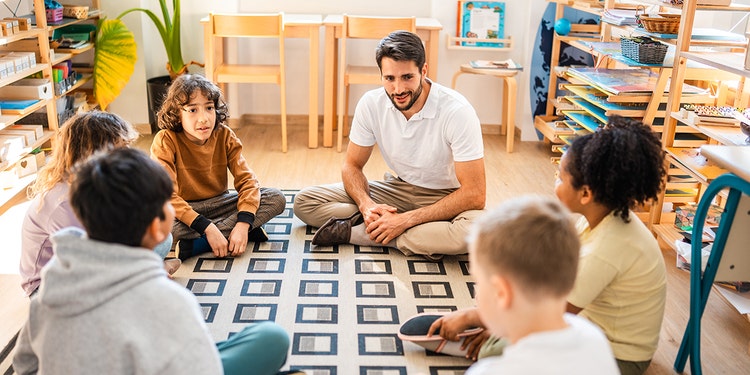
When I was a teacher, I greeted each student at the door as they entered and offered them the choice of a hug or a handshake. A note on the whiteboard welcomed them to the day, and we gathered on the rug in a circle for a morning meeting to connect, reflect, and celebrate our learning together. These small rituals helped students feel seen, valued, and part of our classroom community.
These seemingly simple routines take time and intention to build, especially at the beginning of the school year when teachers feel immense pressure to hit the ground running academically. Spending time practicing lining up, transitioning between activities, or participating in a class meeting can feel counterintuitive, but I learned that those early investments in relationships and routines are what make learning possible. When students know they belong, understand expectations, and feel connected to their teacher and classmates, they're better prepared to engage, take risks, and grow throughout the year.
That's why what teachers do in the first weeks of school matters so much. They can set the foundation for the classroom culture, routines, and relationships that will support students all year long.
Key takeaways for the first weeks of school
The first weeks of school are about more than learning names, reviewing procedures, and setting up back-to-school routines. They're an opportunity to build the relationships, routines, and classroom culture that will shape students' learning experiences for the rest of the year. In this article, we'll explore why those early investments matter, practical ways to build classroom community, the classroom routines worth teaching explicitly, and how creating space for both structure and joy can help students thrive from day one.
Why the first weeks of school matter for classroom culture
The first few weeks of school are about much more than introductions.
Students are learning what kind of classroom they're going to be a part of for the year. They're figuring out whether they belong, whether they're safe taking risks, and whether they can trust the adults and peers around them.
Students can only thrive when teachers intentionally establish expectations, build community, and create predictable learning environments from the start. When students know what to expect, they can spend less energy navigating uncertainty and more energy focused on learning.
It may feel inefficient to practice walking in the hallway or gathering on the carpet multiple times. But every minute spent building strong classroom routines helps students understand expectations, gain independence, and work more effectively together later.
You can think about it this way: teaching children how to learn together is just as important as teaching what they'll learn together.
Building classroom community starts with relationships
When teachers ask, "What is the most important thing to focus on during the first weeks of school?" the answer is simple: invest in relationships.
Research consistently shows that positive teacher-student relationships support student engagement, behavior, and academic success (Roorda et al.). Students who feel connected to their teachers are more likely to participate, persevere through challenges, and take risks as learners.
Small moments create lasting connections
Building classroom community doesn't require elaborate team-building activities. In many cases, it's the small, consistent moments that matter most.
Some of the practices that helped me build connections with and between students included:
- Greeting every student by name each morning
- Offering a hug, high-five, or handshake at the door
- Writing daily welcome messages on the whiteboard
- Using morning meetings to build community
- Ending the day with reflection and celebration
- Displaying visual reminders for routines
- Learning about students' interests, strengths, and goals
Getting-to-know-you activities can be just as valuable as teaching procedures during the first weeks of school. Whether it's partner interviews, classroom surveys, community circles, or collaborative challenges, these experiences help students learn about one another, discover shared interests, and begin building the trust that supports learning all year long. They send an important message that who you are matters here, not just what you know.
Essential classroom routines to establish early
Strong classroom routines aren't about controlling students. They're about creating a predictable environment where everyone can learn.
When students know what to expect, they spend less energy figuring out what comes next and more energy focusing on instruction. These routines also support teacher classroom management by making expectations clear, reducing disruptions, and helping students move through the day with confidence.
Classroom routines worth teaching explicitly
Consider teaching and practicing routines for:
- Entering and exiting the classroom
- Morning arrival procedures
- Classroom discussions
- Small-group work
- Independent reading and writing
- Technology use
- How to ask for help
- Managing materials
- Transitioning between activities
- Lining up and moving through hallways
Don't rush past the practice
If you're spending the first week practicing how to line up, raise a hand, or move between learning stations, you're not falling behind.
You're building the systems that will support learning for the next nine months.
The time invested now often reduces behavior interruptions later, creating more opportunities for meaningful instruction throughout the year.
Positive classroom culture strategies that help students thrive
A positive classroom culture emerges when students experience both belonging and accountability. Simple classroom culture strategies, like constant greetings, shared expectations, class meetings, and opportunities for student voice, help students feel both supported and accountable.
Students thrive when they know what's expected of them and feel supported in meeting those expectations.
The strongest classroom communities are warm, safe, and collaborative, with clear expectations that help students feel both supported and challenged. When students know they belong and understand their role in the classroom community, they're more likely to participate, take academic risks, and contribute positively to the learning environment.
Leave room for joy and discovery
During the first weeks of school, it's easy to focus entirely on routines, procedures, and getting everyone on the same page. Those things matter. But so do the moments that remind students why they love learning in the first place.
As teachers, we often feel pressure to maximize every minute. Yet some of the most meaningful learning experiences happen when we follow students' curiosity, pause for an unexpected discussion, laugh together, or spend a few extra minutes exploring a question that wasn't part of the lesson plan.
The strongest classrooms aren't just organized — they're alive with wonder, connection, and a sense of shared purpose.
Structure creates space for spontaneity
One of the great ironies of teaching is that strong routines actually create more opportunities for joyful learning.
When students know how to transition, collaborate, access materials, and work independently, teachers spend less time managing logistics and more time responding to teachable moments.
That's when you can:
- Follow a student's thoughtful question
- Celebrate a breakthrough moment
- Extend a class discussion
- Share a favorite read-aloud
- Pause to recognize an act of kindness
- Embrace the unexpected moments that build classroom community
In other words, routines don't diminish joy — they create the conditions for it.
Students learn best when they feel they belong
Some of my strongest classroom memories aren't tied to a particular lesson. They're tied to moments of connection: greeting students at the door, hearing about their weekends during morning meetings, celebrating small victories, and watching students who were once hesitant begin to see themselves as capable learners.
Those moments may not show up on a pacing guide, but they're often what students remember most.
And when students feel seen, valued, and connected, they're more willing to engage, participate, and take risks as learners.
First weeks of school checklist for back-to-school routines
Use this first weeks of school checklist to plan back-to-school routines, build relationships, and create a classroom culture where students feel ready to learn.:
- Learn every student's name quickly
- Greet students personally each day
- Create opportunities for students to connect with one another
- Establish and practice classroom routines
- Teach expectations explicitly
- Hold regular class meetings
- Communicate with families early and often
- Help students set goals
- Celebrate small wins
- Make belonging a priority
- Remember that relationships and routines are not separate from learning
Download Checklist{radiant-red}
Resources to support back-to-school success
Building relationships, establishing routines, and creating a positive classroom culture take time and intention. The right instructional tools can help by reducing time spent searching for resources, managing materials, or piecing together data from multiple sources.
Whether you're helping students build literacy skills with Raz-Plus®, strengthening math fact fluency with ReflexTM, learning fractions with FraxTM, or exploring STEM concepts through GizmosTM, effective and engaging instructional solutions can free up more time for what matters most — connecting with students and responding to their individual needs.
By prioritizing relationships, routines, and connection from day one — and pairing them with proven instructional tools — teachers create the conditions for learning to flourish all year long.
The small moments that make learning possible
As I think back to those first weeks of school, I don't remember whether I was perfectly on pace with my curriculum map. What I do remember are the students who walked through my classroom door unsure of themselves and left months later as confident learners. I remember the morning greetings, the class meetings, the shared laughter, and the routines that eventually became second nature. Those early investments didn't take time away from learning — they made learning possible.
Support a strong start with ExploreK12
The first weeks of school lay the foundation for everything that follows. Whether you're building literacy skills, strengthening math confidence, or inspiring curiosity through science, ExploreK12™ solutions are designed to help you make the most of every learning moment.
Start a free trial today and discover how Raz-Plus, Reflex, Frax, and Gizmos can help you engage students, personalize learning, and support growth all year long.
Resource:
Roorda, Debora L., et al. "The Influence of Affective Teacher-Student Relationships on Students' School Engagement and Achievement: A Meta-Analytic Approach." Review of Educational Research, vol. 81, no. 4, 2011, pp. 493-529. DOI: 10.3102/0034654311421793.
Frequently asked questions: back-to-school routines and beyond
What should teachers focus on during the first weeks of school?
Teachers should focus on building relationships, establishing classroom routines, teaching expectations, and creating a sense of belonging. These foundational practices support learning throughout the year.
How do you build classroom community?
Building classroom community starts with helping students feel known, valued, and connected. Daily greetings, class meetings, shared experiences, and opportunities for student voice all strengthen classroom relationships.
What routines should be established early?
Focus on the routines students use every day, including arrivals, transitions, discussions, independent work, collaboration, technology use, and classroom procedures.
How do positive teacher-student relationships improve learning?
Positive teacher-student relationships support engagement, academic achievement, classroom behavior, and student well-being. Students are more likely to take risks and persevere when they feel connected to their teacher.
Why is it important to spend time on routines at the beginning of the year?
Teaching classroom routines early creates predictability, reduces disruptions, and helps students become more independent. While it may feel like time away from academics, strong routines ultimately create more time for meaningful learning throughout the school year.